

Clean your bamboo Lazy Susan with a damp cloth and mild soap, dry it promptly, and keep it away from standing water and excess heat. These simple habits help protect the bamboo surface and keep the turntable working smoothly.
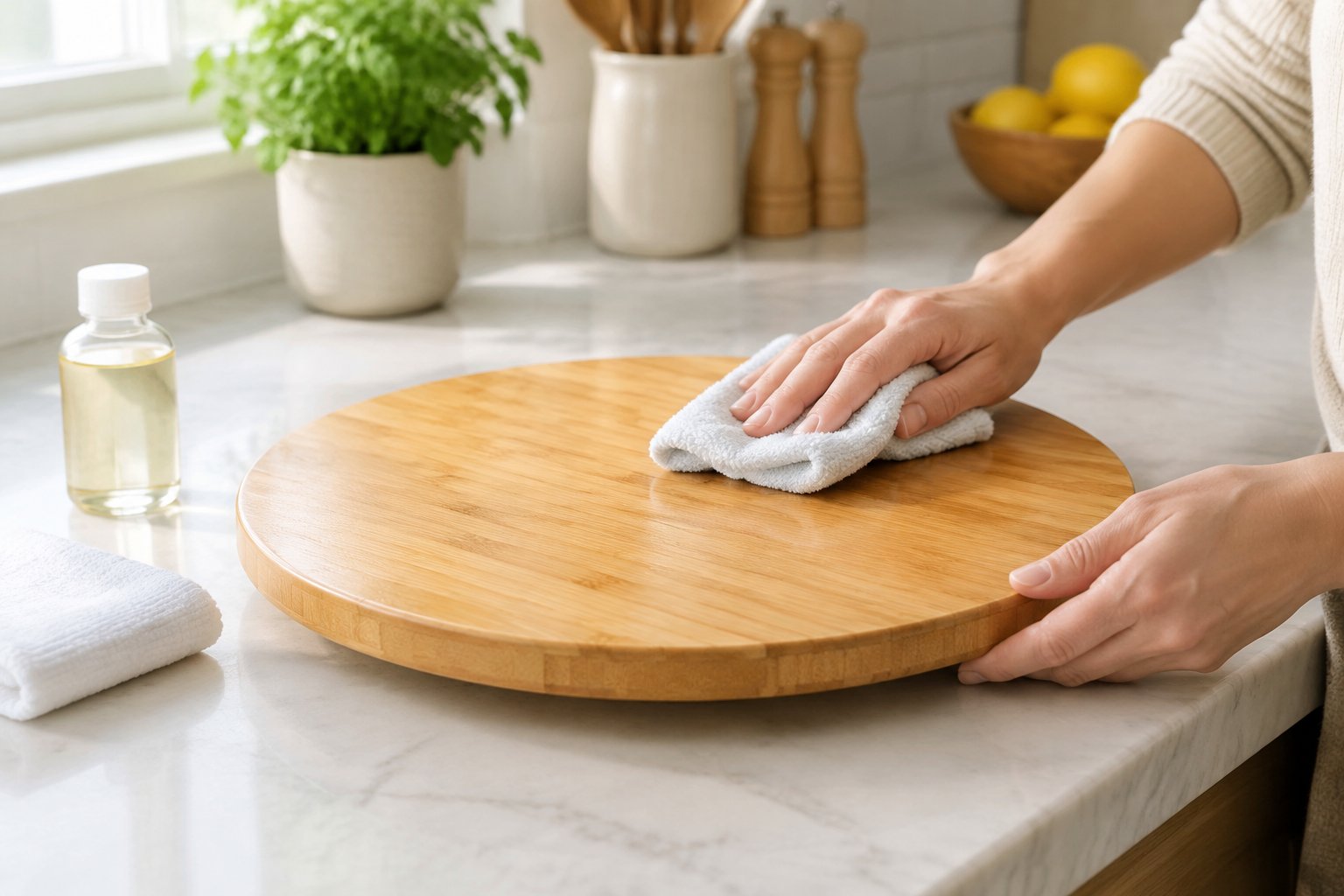
You’ll also learn how to care for its finish, address stains or odors, maintain the rotating hardware, and store it safely. Check the product’s care instructions before applying oil or other treatments, since finishes vary.
Daily Cleaning Essentials
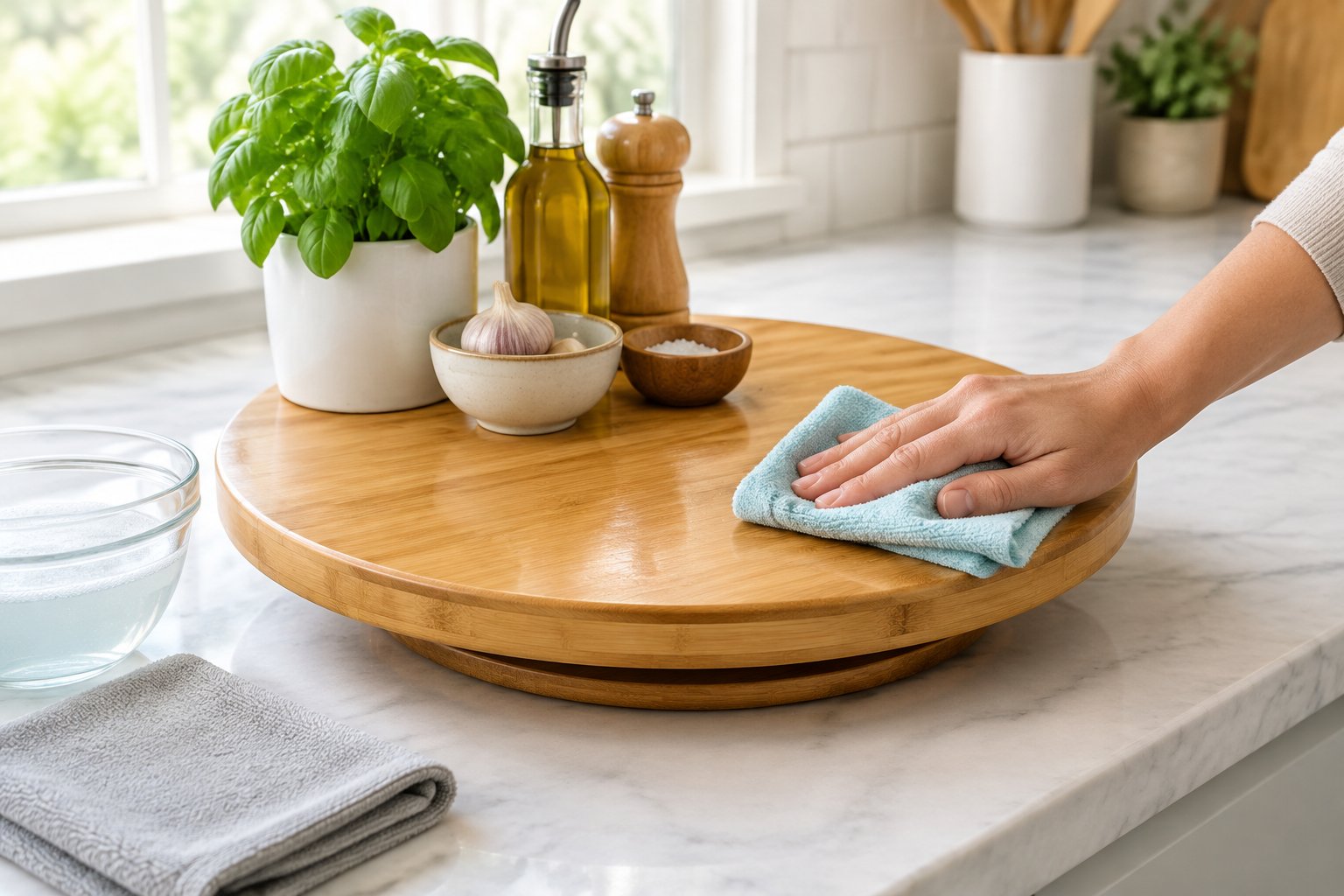
Clean your bamboo Lazy Susan by hand with warm water, mild dish soap, and a soft damp cloth. Dry it promptly, and keep it away from prolonged moisture, dishwashers, and harsh cleaners.
Wiping With Mild Soap and a Damp Cloth
After use, remove crumbs and food residue with a soft cloth dampened with warm, soapy water. Use a small amount of mild dish soap, then wipe the surface gently, including the rim and any grooves where debris can collect.
Avoid abrasive scrubbers, which can scratch the bamboo. For sticky spills, hold the damp cloth against the spot briefly to loosen residue, then wipe it away. Follow with a clean cloth dampened with plain water to remove soap.
Bamboo kitchenware is best washed by hand with mild soap. Clean your Lazy Susan soon after spills so sauces and oils do not sit on the surface.
Drying Immediately After Cleaning
Wipe the Lazy Susan dry with a clean towel as soon as you finish washing it. Pay attention to the underside, edges, and any joints, where water can linger. Then let it air-dry fully before returning it to a cabinet or placing food on it.
Keeping bamboo dry helps limit swelling and warping. Avoid leaving the turntable on a wet counter or stacking it while damp. Towel-drying bamboo after cleaning is a practical way to remove moisture quickly.
Avoiding Dishwashers, Soaking, and Harsh Cleaners
Do not put your bamboo Lazy Susan in the dishwasher. High heat and prolonged exposure to water can damage the material, so wash it by hand and avoid leaving it in a sink, basin, or tub. Totally Bamboo recommends hand washing its Lazy Susans.
Skip bleach, abrasive powders, and strong chemical cleaners. These can affect the surface and leave residues where food is served. Use mild dish soap and water, rinse away any soap with a clean damp cloth, and dry the turntable promptly.
Protection From Moisture and Heat
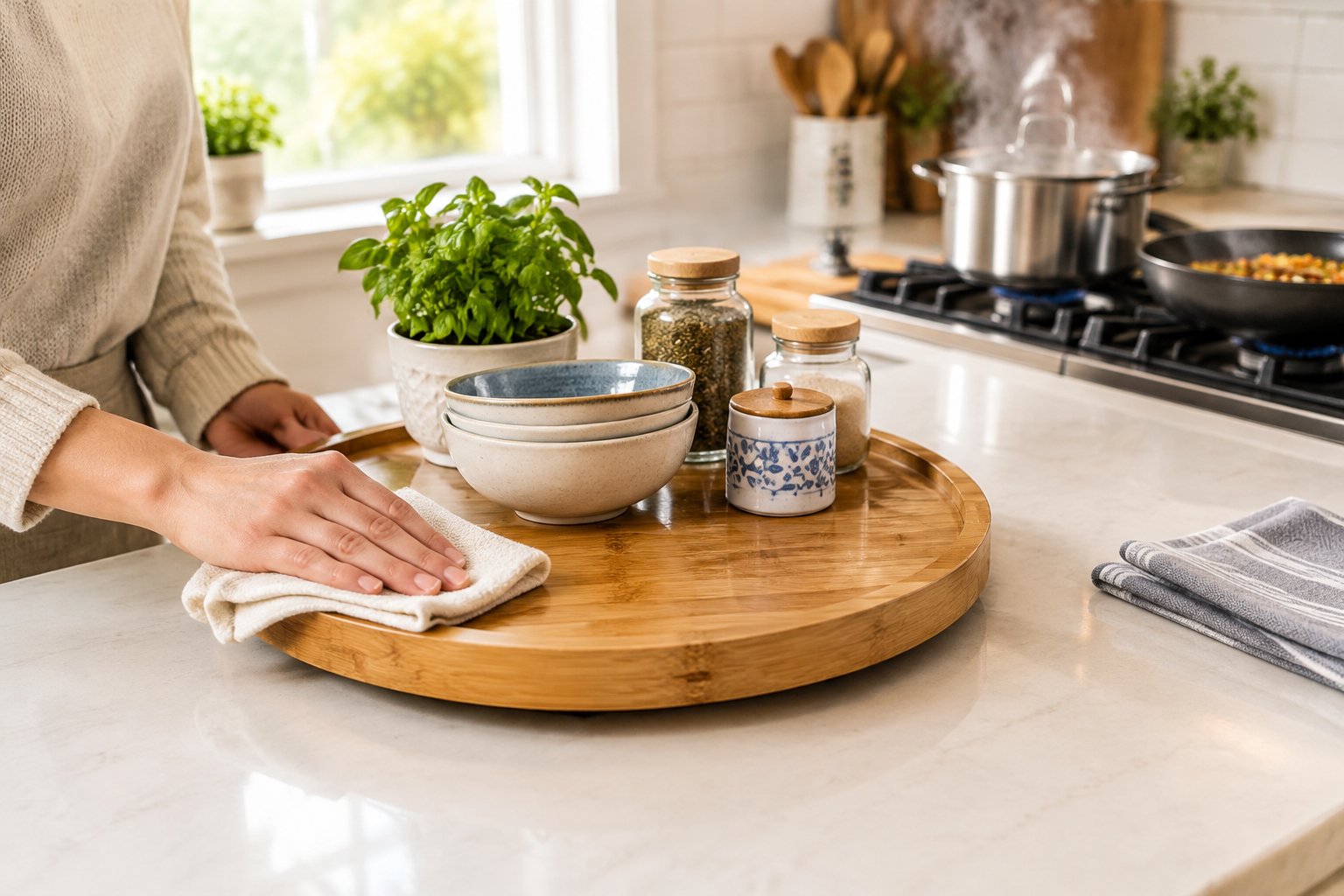
Keep your bamboo Lazy Susan dry, wipe spills promptly, and use coasters or trivets under hot or damp items. Store it away from direct sunlight and heat sources to reduce the risk of drying, discoloration, or warping.
Managing Spills and Condensation
Wipe up spills as soon as you notice them. Bamboo can handle brief moisture exposure, but water left on the surface or trapped beneath a container can seep into joints and contribute to swelling, stains, or warping. Dry the surface with a soft cloth, including the underside and edges.
If condensation forms under a cold glass or jar, lift the item and dry the bamboo beneath it. After cleaning, leave the Lazy Susan in a well-ventilated spot until it is fully dry before putting it back in a cabinet. Hand-wash with warm, soapy water only if needed, and avoid soaking it or putting it in a dishwasher. These care steps align with manufacturer guidance for cleaning bamboo Lazy Susans.
Using Coasters and Trivets
Place coasters beneath cold drinks, damp bottles, and jars that may leave moisture rings. A dry barrier keeps condensation from sitting directly on the bamboo, especially during meals or when you store frequently used containers on the turntable.
Use a trivet or heat-resistant pad beneath hot cookware. Do not set a hot pan, baking dish, or kettle directly on the surface, since concentrated heat can mark or dry the finish. Check that the pad is clean and dry before placing it down, and remove it after use so moisture or heat does not remain trapped against the bamboo.
Choosing a Dry Location Away From Direct Sunlight
Keep your Lazy Susan in a dry cabinet or on a countertop away from sinks, dishwashers, and stovetops. Avoid spots where splashes, steam, or frequent temperature changes reach the bamboo. If you store it in a cabinet, make sure the shelf is dry before returning the turntable.
Direct sunlight can fade or unevenly dry bamboo over time. Choose a shaded location away from windows and strong heat sources, such as ovens or radiators. If the Lazy Susan gets damp, let it air-dry fully before storing it.
Finish-Specific Conditioning
Your care routine depends on the finish: follow the maker’s instructions for sealed bamboo, and condition unsealed surfaces with a food-safe oil. Apply a thin coat and wipe away excess so the Lazy Susan stays clean and easy to turn.
Checking the Manufacturer’s Care Instructions
Check the product label, packaging, or manufacturer’s care page before applying oil. A sealed or lacquered finish may not absorb conditioner, and oils or abrasive cleaners can leave residue or damage its coating. For care guidance, review the maker’s instructions for cleaning and maintaining bamboo products.
If you can’t identify the finish, contact the manufacturer with the product name or a photo. Until you confirm the instructions, clean the surface with a soft, damp cloth and dry it promptly. Avoid soaking the tray or letting water sit around its center bearing.
Selecting Food-Safe Oil for Unsealed Bamboo
For an unsealed Lazy Susan used to serve food, choose an oil labeled food-safe for cutting boards or kitchen utensils. Food-grade mineral oil is a common option because it remains liquid and does not turn rancid like many cooking oils. Follow the product label, and check your Lazy Susan’s care instructions before use.
Avoid olive, vegetable, and other kitchen cooking oils. They can oxidize over time and leave a sticky or unpleasant-smelling surface. If you prefer a conditioner blend, confirm that every ingredient is food-safe and intended for surfaces that contact food.
Applying Conditioner Without Over-Oiling
Start with a clean, fully dry surface. Put a small amount of oil on a soft cloth, then spread a thin, even layer across the bamboo, following the grain. Keep oil away from the center bearing and any hardware, where residue can collect or interfere with smooth rotation.
Let the oil absorb according to its label, then wipe the entire surface with a clean cloth. The bamboo should feel smooth, not greasy. Add another light coat only if the surface still looks dry after the first application; frequent heavy applications can leave buildup.
Turntable Mechanism Maintenance
Keep the rotating base free of crumbs and spills, and check the bearing track if your bamboo lazy Susan turns roughly or makes noise. Place items evenly across the surface to reduce strain on the mechanism.
Removing Debris Around the Rotating Base
Remove everything from the turntable before cleaning so you can reach the full rotating base. Lift the bamboo top only if its design allows it to come off easily; don’t force it, since some models have fixed plates or attached bearings.
Wipe crumbs and dust from the track and around the central post with a dry, soft cloth or a small brush. For sticky spills, use a barely damp cloth, then dry the area promptly. Keep excess water away from the bamboo and metal hardware, since moisture can damage the wood or encourage corrosion.
Check the track for food residue and debris after cleaning. A lazy Susan bearing cleaning guide also recommends cleaning the swivel plate and lubricating its mechanism.
Troubleshooting Stiff or Noisy Rotation
Turn the empty lazy Susan slowly and listen for scraping, grinding, or clicking. Look for an object caught beneath the rotating shelf, a loose fastener, a bent component, or a bearing track that has shifted out of alignment. Tighten accessible screws gently, and stop if a part appears damaged.
After removing debris, test the rotation again. If the manufacturer permits lubrication, apply a small amount of food-safe, silicone-based lubricant to the metal bearing track, then rotate the shelf to distribute it. Wipe away any excess so it does not collect dust or reach food-contact surfaces. Cleaning and lubrication can help address friction, as described in this lazy Susan turntable repair guide.
Keeping Loads Balanced and Within Capacity
Arrange jars, bottles, and other items evenly around the turntable. Keep heavier items near the center and avoid clustering them along one edge, where their weight can make rotation uneven or put extra pressure on the bearing.
Follow the manufacturer’s stated weight limit, and account for the combined weight of everything on the shelf. If you do not have a capacity rating, avoid overloading the unit or using it to hold unusually heavy items. Check that the bamboo surface sits level and turns without rubbing after you reload it.
Stains, Odors, and Surface Damage
Clean stains with mild soap and a damp cloth, then dry the turntable completely. For lingering odors, wash the surface and let it air-dry; check for mold or structural damage before using it again.
Treating Stains Without Damaging the Finish
Wipe spills as soon as you notice them. Use a soft cloth with warm water and a small amount of mild dish soap, then wipe away soap residue with a clean, damp cloth. Dry the lazy Susan promptly with a towel, including the underside and around the center bearing.
For a stubborn mark, test a small amount of baking soda mixed with water on an inconspicuous spot. Rub gently with a soft cloth, then rinse and dry. Avoid soaking the bamboo, abrasive pads, bleach, and harsh cleaners, which can dull or damage the finish. If the item has a care label or manufacturer instructions, follow those directions.
Addressing Persistent Odors and Mold
Wash the surface with mild soap and water, then dry it thoroughly and leave it in a well-ventilated place until no moisture remains. For a persistent odor, rub the surface gently with a lemon wedge, rinse with a damp cloth, and dry. Test this method on a hidden area first, since acidic ingredients can affect some finishes.
If you see mold, keep the lazy Susan away from food while you clean it. Wipe the affected area with a cloth lightly dampened with a diluted vinegar solution, then wipe with clean water and dry immediately. Discard the item if mold has penetrated cracks or joints, or if the smell remains after cleaning.
Recognizing Cracks, Warping, and Other Replacement Signs
Inspect the top, edges, underside, and center bearing. Fine surface scratches may be cosmetic, but deep cracks, loose bamboo strips, splinters, or separated joints can trap food and weaken the turntable. Stop using it for food service if damage creates rough or hard-to-clean areas.
Check that the lazy Susan sits flat and rotates smoothly. Warping, wobbling, or a bearing that binds after you clear away debris can make dishes unstable. Replace the unit if you cannot restore safe, steady rotation or if structural damage worsens. Keep bamboo dry between uses to reduce moisture-related damage.
Long-Term Storage
Store your bamboo Lazy Susan clean and fully dry, with room for air to circulate. Protect its surface from scratches and pressure by keeping it flat and away from heavy items.
Cleaning and Drying Before Storage
Wipe the Lazy Susan with a soft cloth dampened with warm water and a small amount of mild dish soap. Avoid soaking it or putting it in a dishwasher, since prolonged moisture and heat can damage bamboo.
Wipe away soap with a clean, damp cloth, then dry every surface with a towel. Let the board air-dry completely in a well-ventilated spot before storing it, including around the turntable hardware. Trapped moisture can encourage mold or cause the bamboo to warp.
Preventing Scratches and Pressure Damage
Store your Lazy Susan flat on a level shelf or in a cabinet where it will not lean against hard objects. Place a clean, dry cloth between it and nearby items to reduce scuffs. Keep heavy cookware and stacked dishes off the surface, since concentrated weight can leave dents or strain the turning mechanism.
Choose a cool, dry storage area away from direct sunlight, heaters, and damp basements. Avoid tightly wrapping the Lazy Susan in plastic, which can trap moisture. If you stack other lightweight items on it, use a soft protective layer and make sure the stack does not press down on the rim or hardware.