

With a soft 60" x 80" cable knit throw blanket, you get a generous layer for lounging on your sofa or adding texture to your bed. Its 5-by-6⅔-foot size gives you room to stretch out or drape it across your lap.
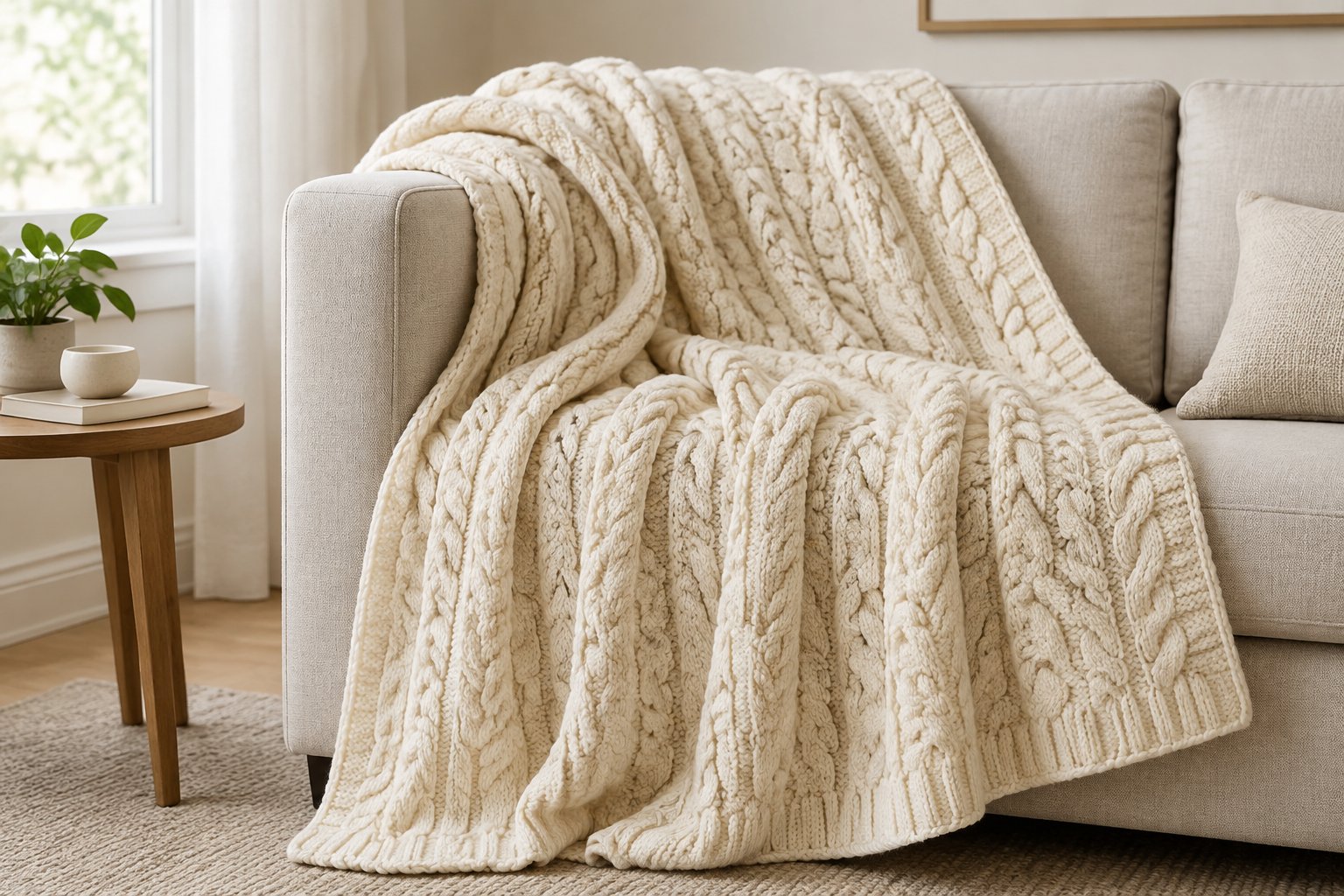
Your choice of material shapes its weight, feel, and warmth. You’ll find options such as machine-washable chenille and lightweight acrylic, so check the fiber content and care label before choosing.
Match the color and knit texture to your space, and consider how you’ll use and wash your throw. Those details help you choose a blanket that suits your comfort, decor, and everyday routine.
Size, Coverage, and Everyday Uses
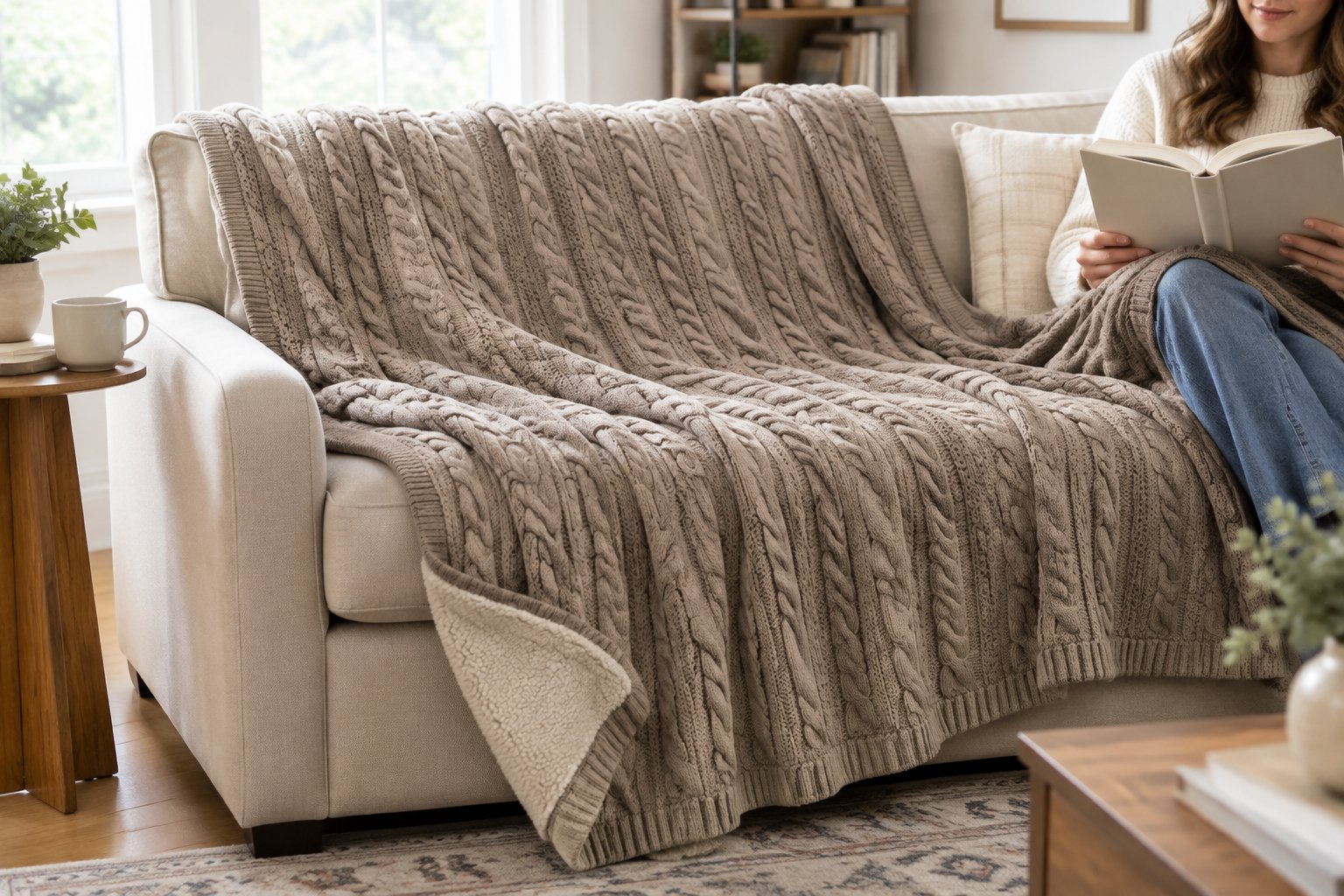
A 60-by-80-inch throw gives you 5 by 6 feet 8 inches of coverage for stretching out on your sofa or adding a layer to your bed. Its placement determines how much fabric reaches your feet, wraps around your sides, or hangs over the mattress.
How 60 by 80 Inches Fits Sofas and Beds
You get these dimensions with options such as this 60-by-80-inch cable knit throw. On your sofa, place the 80-inch edge along the seats for wider coverage, or run it lengthwise down a chaise to cover your legs.
For beds, compare the blanket with your mattress dimensions:
- Twin, 38 by 75 inches: Centering the throw leaves about 11 inches on each side and 5 inches of extra length.
- Queen, 60 by 80 inches: The throw matches the mattress surface dimensions, leaving no side overhang.
If you want fabric hanging over your queen mattress, fold the throw across the foot of your bed as a decorative layer. Check your mattress measurements before choosing placement.
Coverage for Lounging and Layering
For solo lounging, position the 80-inch length from your shoulders toward your feet. Your height and seated position affect whether you have enough fabric to tuck around your toes.
When you share the throw, spread the 80-inch edge across both laps. That gives you more width, though wrapping fabric around each person uses some of that shared coverage.
For bedtime layering, spread it over your existing bedding where you want extra warmth, such as across your legs. Size alone does not determine warmth: yarn composition, knit density, and backing affect insulation. Check those details before choosing your throw for a cool bedroom or year-round sofa use.
Materials, Texture, and Warmth
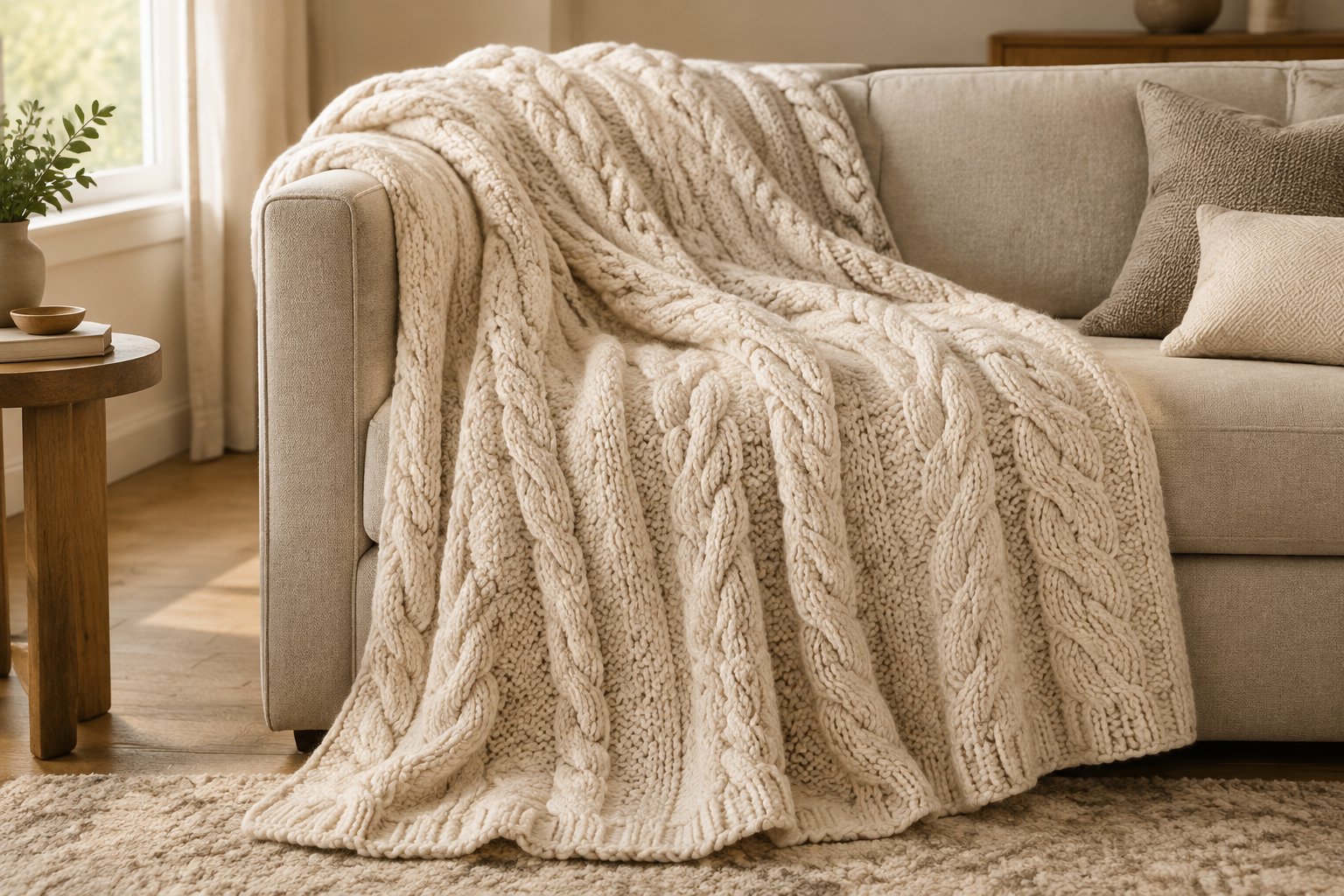
Your 60" x 80" throw’s fiber content, knit density, and backing determine its feel and warmth. Raised cables add texture, while gaps between stitches allow airflow.
Fiber Composition and Skin Feel
Check the fiber label and backing material before choosing your throw. Products with the same dimensions and cable pattern use different fabrics. For example, NTBAY lists a 100% cotton cable knit throw, while other designs combine a knitted face with synthetic fleece.
Cotton absorbs moisture and gives you a breathable layer for direct skin contact. Polyester absorbs little moisture and dries relatively quickly. Your experience of softness also depends on yarn thickness, finishing, and the texture against your skin.
For extra warmth, look for a lined design. Lavish Home offers a 60" x 80" throw with a cable knit front and sherpa back. Its fluffy backing adds insulation and gives you a different contact surface from the raised knit.
Cable Knit Construction and Breathability
Cable knitting crosses groups of stitches to create raised, rope-like patterns. You feel these ridges across the blanket’s face, with flatter sections between them. The pattern adds local thickness; your throw’s warmth also depends on yarn weight, stitch spacing, and lining.
An open, unlined knit allows air to pass through gaps between stitches. If you get warm while sitting, this construction offers ventilation. A closely knitted fabric leaves smaller openings and provides more continuous coverage across your body.
A fleece or sherpa backing adds a layer that restricts airflow through the knitted face. Choose an unlined throw for lighter layering, or a backed version when you want more insulation on a cool sofa or bed.
Styling for Your Living Space
Coordinate your 60" x 80" cable knit throw with your upholstery, rug, and cushions. Keep its textured face visible, and fold the extra length to keep fabric off the floor.
Choosing Colors That Complement Your Decor
Start with your largest upholstered piece. Against a charcoal sofa, choose cream or oatmeal for a lighter accent; against beige upholstery, use olive, rust, or navy to introduce a distinct color.
Match undertones across your textiles. Pair warm ivory with tan leather and honey-colored wood, or choose a light grey cable knit throw alongside cool grey seating and blue cushions.
Repeat one color from your rug, curtains, or artwork to connect the throw with your existing decor. If you already have patterned cushions, choose a solid-colored blanket so the cable texture adds detail without introducing another print. Check your choice beside the sofa in daylight and under your evening lamps.
Draping and Folding for a Finished Look
Your 60" x 80" throw offers substantial coverage, so fold it before placing it on a chair or compact sofa. Keep the cable knit facing outward, especially if your blanket has a contrasting backing.
- Over a sofa arm: Fold it lengthwise into thirds, then drape it over the arm with both ends above the floor.
- Across a backrest: Fold it into a broad rectangle and position it over one side, clear of the seat.
- On an accent chair: Fold it in half lengthwise and lay it across the back and seat.
Smooth bulky folds by hand without stretching the knit. Leave enough seating space to sit comfortably, and tuck loose edges away from walkways.
Care and Long-Term Durability
Follow your blanket’s care label to protect its cable texture and shape. Gentle washing, careful drying, and protection from sharp edges help limit pilling, snags, and stretching.
Following Washing and Drying Instructions
Check the sewn-in label before washing. Fiber content and construction affect care requirements: one 60" x 80" polyester cable knit throw lists machine washing, while your blanket’s label determines its wash temperature and drying method.
If your label permits machine washing, choose cold water and a gentle cycle with mild detergent. Wash the blanket separately from towels, denim, and items with exposed zippers to reduce friction and snagging. Give it enough drum space to move freely.
Avoid wringing the wet knit. Support its weight when removing it from the washer, then reshape it gently. If the label calls for flat drying, spread it on a clean, dry surface. Use a dryer only at the setting your label permits.
Minimizing Snags, Pilling, and Stretching
Keep your blanket away from pet claws, rough furniture edges, and hook-and-loop fasteners. When you move it, gather the fabric in your arms so its weight stays supported. Pulling it by one corner puts strain on the knit.
Treat loose yarn and surface pills gently:
- Snags: Avoid pulling or cutting a loose loop. Use a blunt yarn needle to guide it toward the reverse side without tightening nearby stitches.
- Pills: Follow the care instructions for removal. If permitted, test a fabric shaver on a hidden spot and keep it away from raised cables.
Fold your clean, completely dry blanket for storage. Avoid hanging it for extended periods, which puts sustained tension on the knit and encourages stretching.